
As economic development professionals, we see generative AI as a tremendous innovation for how we approach regional growth, policy design, and stakeholder engagement. The technology’s ability to automate routine tasks, synthesize complex data, and generate insights is already making a measurable impact on productivity and innovation in our field. To maximize its potential, look to best practices and maintain a critical, even skeptical perspective.
What We Heard from You
At our annual Women’s Economic Development Network conference earlier this year, we asked attendees how they were using AI in their work. We were surprised that 25% said they really did not use AI very much. Nearly half said they use it every day, though, perhaps illuminating a dichotomy between those who are attracted to and more comfortable with the new technology and those that are reluctant to engage.
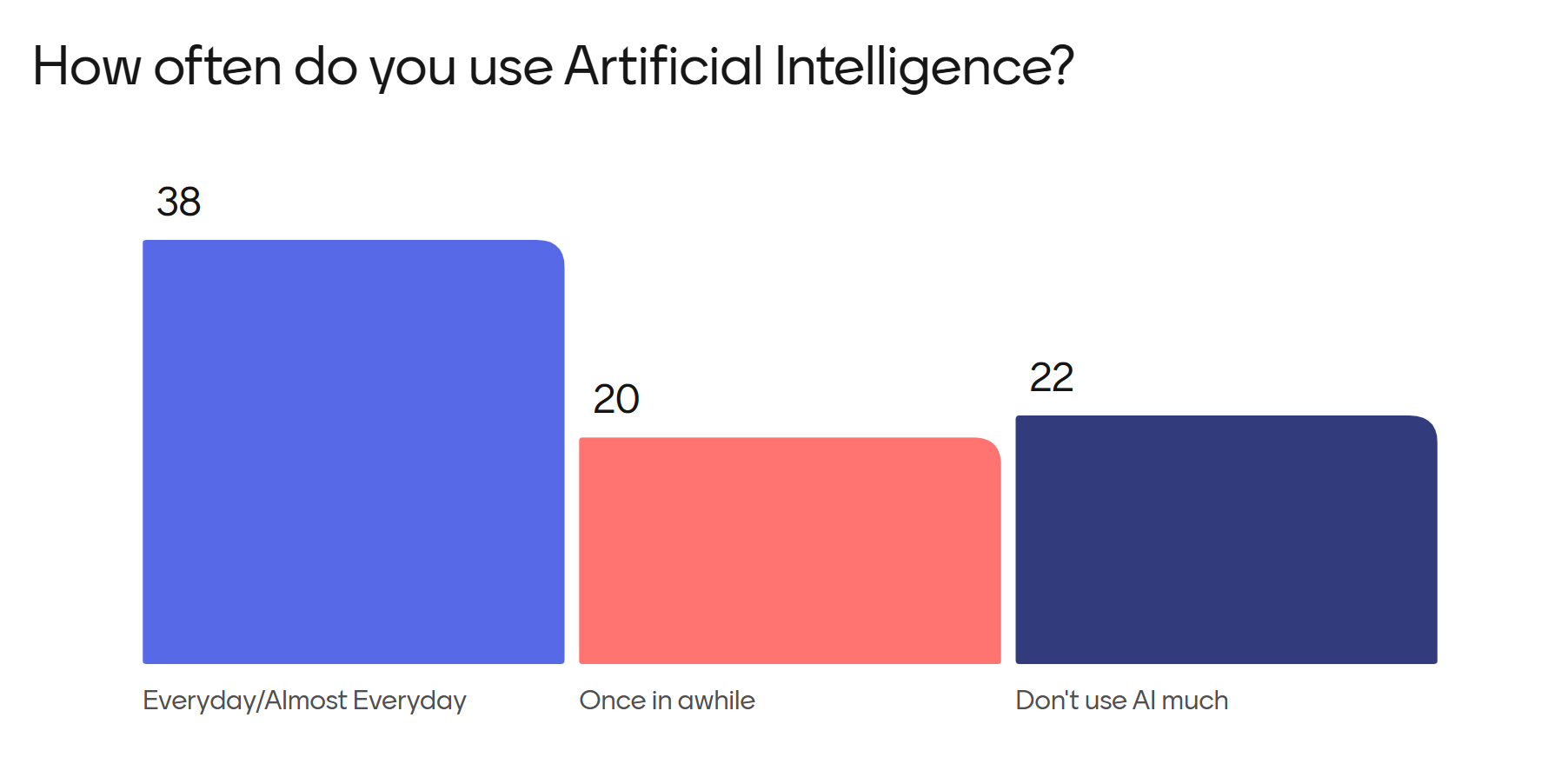
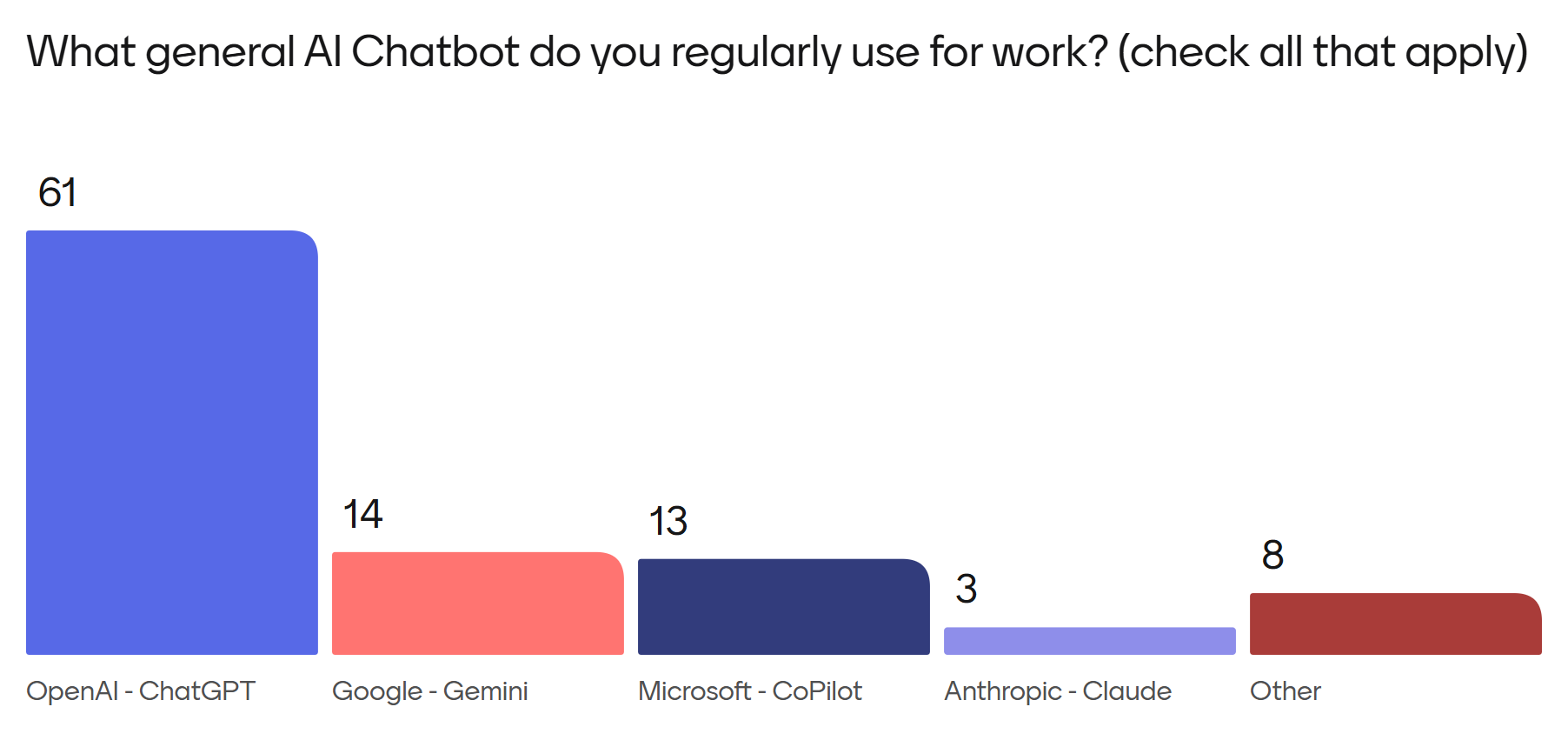
We also asked which platform or ‘chatbot’ the attendees were using, and Open AI’s ChatGPT was by far the most often cited tool.
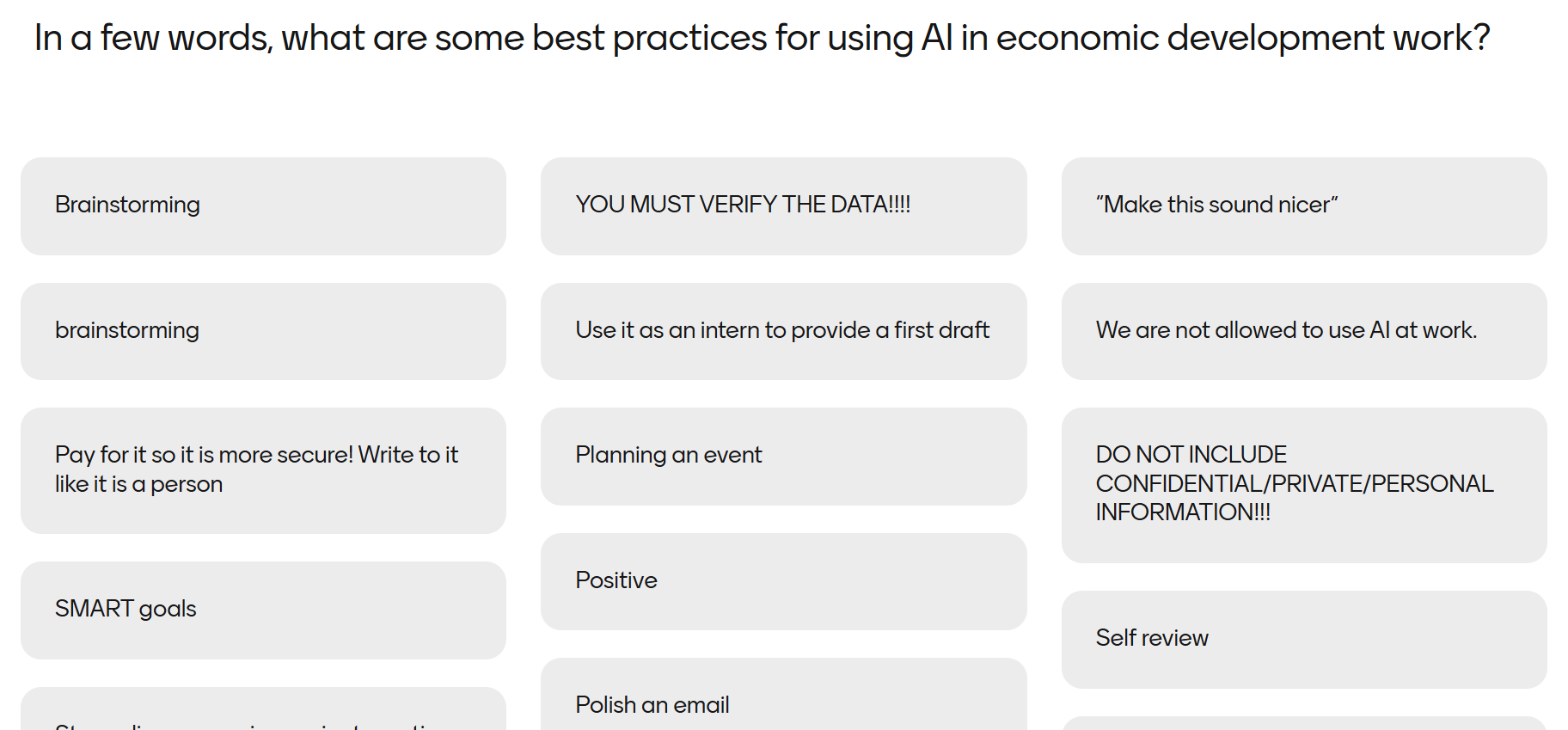
Finally, we had a lively discussion about use cases and best practices and ‘friendly warnings’ about using AI in our work. Interestingly, there were attendees whose organizations had prohibited using AI in their workplace. It will be interesting to see if this holds. To us it seems like missing an opportunity to leverage a powerful technology. Asking AI to cite sources and thoroughly reviewing customizing the output of AI were the most basic and agreed-upon examples of cautions.
Practical Use Cases for Generative AI
Here are some clear applications where generative AI can add value:
- Report and Grant Writing: AI can draft compelling reports, grant applications, status updates and policy briefs, saving significant time and ensuring consistency and clarity. For example, you might use AI to generate a first draft of a business attraction report or a funding proposal, then refine and expand it with specific local context and data.
- Note Taking and Meeting Summaries: During stakeholder meetings or public forums, AI can transcribe discussions, highlight action items, and generate concise summaries, enabling more efficient follow-up and accountability.
- Data Analysis and Predictive Modeling: AI excels at analyzing large datasets to identify trends, forecast economic impacts, and model scenarios for policy or investment decisions. This allows economic developers to make data-driven recommendations and anticipate future challenges.
- Stakeholder Engagement: AI can generate personalized communications, draft surveys, and even create interactive tools to gather feedback and foster collaboration among community members and business leaders.
Cautions and Best Practices
While we are excited about the opportunities that generative AI offers, it is not without risks. Hallucinations—where AI generates plausible but inaccurate or fabricated information—are a significant concern, and remarkably frequent. To address this, users must always verify AI-generated content against their personal knowledge and reliable sources.
Best practices for using generative AI in economic development include:
- Give AI a Clear Role: Specify whether the AI should act as a journalist, an expert in a particular sector, or an experienced economic development practitioner. This helps tailor the tone and style of the output.
- Provide Context and Background: Share relevant local data, community profiles, or project details to help the AI generate more accurate and relevant content.
- Request Specific Output Formats: Ask for bulleted lists, pros and cons, or step-by-step action plans to ensure the results are actionable and easy to interpret.
- Iterate and Refine: Continuously improve your prompts and review outputs, making adjustments as needed to enhance accuracy and relevance.
- Check Sources and Validate Outputs: Always cross-reference AI-generated information with authoritative data, especially when it will inform policy or investment decisions.
- Transparent Communication: Document how and where AI was used in the development process and clearly communicate its role to stakeholders to build trust and accountability.
Supplementing with generative AI can unlock significant value—boosting productivity, fostering innovation, and enabling more effective decision-making. McKinsey estimates that generative AI could add trillions of dollars to the global economy, with particular impact in areas like policy analysis, stakeholder engagement, and data-driven planning.
How are you using AI?
Notwithstanding the attendees who were prohibited from using AI in their workplace, we see AI as a growing contributor to research, analysis, and administrative work in economic development offices. Reply to tell us how your office is leveraging AI tools, and we will share these in an upcoming blog post.